


This Sunday, we explore the potential of immersive virtual reality (VR) to enhance cognitive, social, and emotional skills in children and adolescents with Autism Spectrum Disorder (ASD). The study, “Effect of Immersive Virtual Reality-Based Training on Cognitive, Social, and Emotional Skills in Children and Adolescents with Autism Spectrum Disorder: A Meta-Analysis of Randomized Controlled Trials,” conducted by Palka Mittal et … Read More
🔍 #SundayResearchDive: Enhancing Procedural Comfort in Pediatrics with Virtual Reality

This Sunday, we delve into the potential of virtual reality (VR) to enhance procedural comfort for children undergoing medical procedures. The study, “Virtual Reality vs. Tablet for Procedural Comfort Using an Identical Game in Children Undergoing Venipuncture: A Randomized Clinical Trial,” conducted by Christina Zavlanou et al., examines whether VR can provide better comfort and reduce anxiety compared to traditional … Read More
🔍 #SundayResearchDive: Empowering Patients through Virtual Reality

This Sunday, we explore a transformative approach in healthcare that combines patient empowerment with cutting-edge technology. The study, “A Preparatory Virtual Reality Experience Reduces Anxiety before Surgery in Gynecologic Oncology Patients,” conducted by Schmid et al., highlights the efficacy of virtual reality (VR) in reducing preoperative anxiety among patients undergoing gynecologic oncology surgery. 🔗 Dive deeper into the study here: … Read More
Frontiers of Medical Education: Insights from the 1st International Symposium on Immersive Reality for Resuscitation
I recently had the honor of participating in the 1st International Symposium of Immersive Reality for Resuscitation, organized by the European Resuscitation Council (ERC) and the Catholic University of Murcia (UCAM). Held on May 24th and 25th, 2024, this groundbreaking symposium brought together a diverse and dynamic group of experts, academics, healthcare professionals, and technology developers from around the globe … Read More
Behind the Scenes of a Burnout Study: an original VRforHealth.com Interview with Chief Investigator, Dr José Ferrer Costa

An original interview with chief investigator Dr Ferrer Costa about a newly published, successful trial using VR to combat healthcare professional burnout
SundayResearchDive: Virtual Reality in Healthcare: A Look Back at Ethical Foundations
This week’s dive takes us back to 1991 with a visionary editorial from The Lancet titled “Being and believing: ethics of virtual reality.” This piece not only reflects on the early potential of virtual reality (VR) in healthcare but also engages deeply with the ethical implications that accompany technological advancements in the medical field. 🔗 Dive deeper here: https://www.thelancet.com/journals/lancet/article/PII0140-6736(91)90421-K/fulltext 🚀 … Read More
Supporting the 18Loop & ACCO partnership to improve the lives of children with cancer and their families
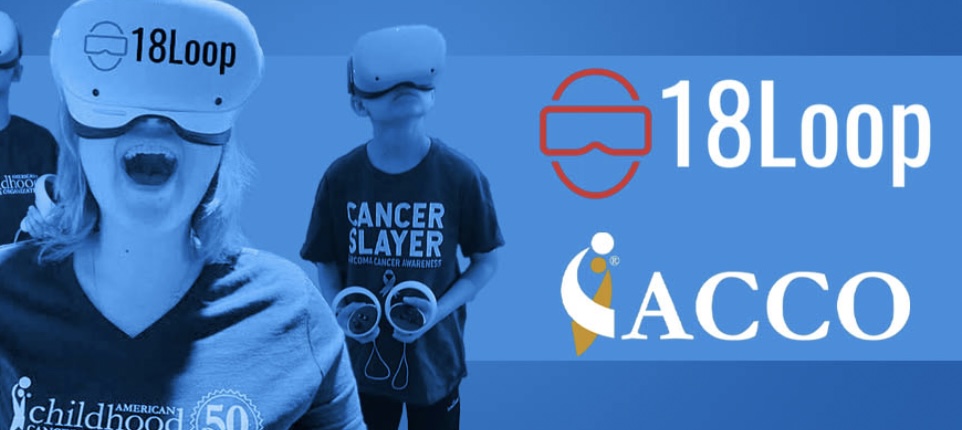
Virtual Reality benefits children and their families as they face cancer. 18Loop and ACCO ensure that headsets and programs are delivered to some of the families that need them. Help us give more by donating to these worthy organizations.
#SundayResearchDive: Unlocking Social Skills in High Functioning Autism through VR
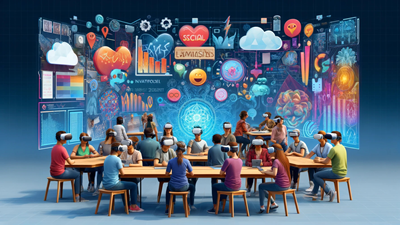
Today’s deep dive brings us to a significant study titled “Validation of Key Components in Designing Social Skills Training Content Using Virtual Reality for High Functioning Autism Youth—A Fuzzy Delphi Method” by Ahmad Basri et al. This research leverages the Fuzzy Delphi method to reach a consensus on vital components necessary for developing effective VR-based social skills training for youth … Read More
🔍 #SundayResearchDive: VR/AR Transforming Critical Care from All Angles
This week, we dive into the multifaceted impact of Virtual Reality (VR) and Augmented Reality (AR) in critical care medicine, as detailed in “Virtual and Augmented Reality in Critical Care Medicine” by Bruno et al. The review offers valuable guidelines and insights from the vantage points of patients, families, healthcare providers, and researchers, outlining a comprehensive view of VR/AR’s role … Read More
🔍 #SundayResearchDive: Navigating Cognitive Assessment Through VR
In the field of cognitive health, the quest for precise and unbiased assessments is a big challenge, particularly as we grapple with the complexities of conditions like Mild Cognitive Impairment (MCI). Traditional cognitive tests, while foundational, often fall short of capturing the nuanced spectrum of cognitive abilities, and their subjective nature can introduce biases, skewing outcomes and impeding accurate diagnosis. … Read More
